BHMS Chorus
Raising Voices, One Song at a Time
Building musicianship, confidence, and connection through choral singing.
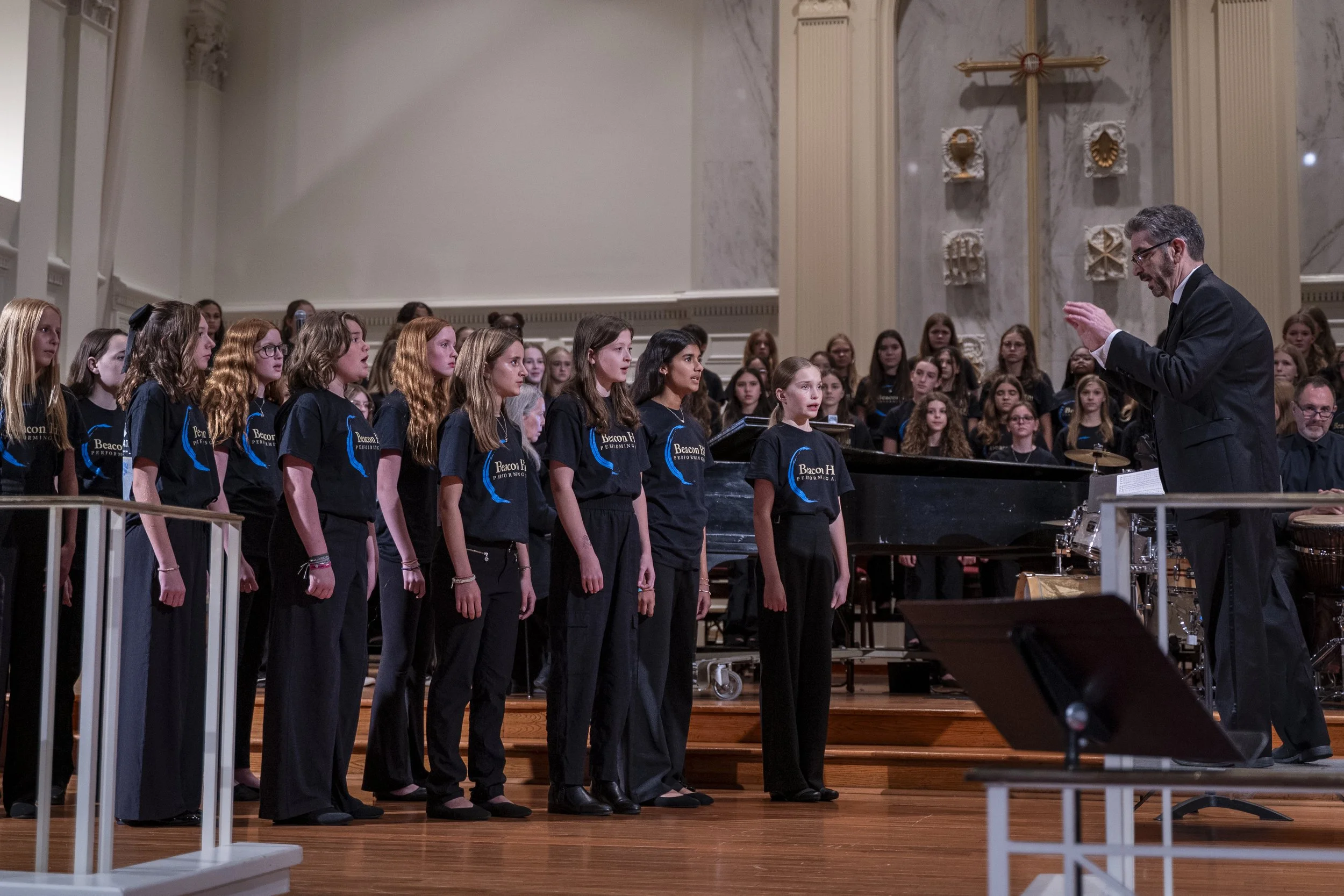
The Beacon Hill Choral Program provides every student, regardless of prior musical background, with ample opportunities to develop choral musicianship. Students progress through a sequence of learning and performing experiences designed to develop vocal technique, musical literacy, and confidence as performers.
The program aims to create solid artistic experiences in choral music, in an inclusive and welcoming environment.
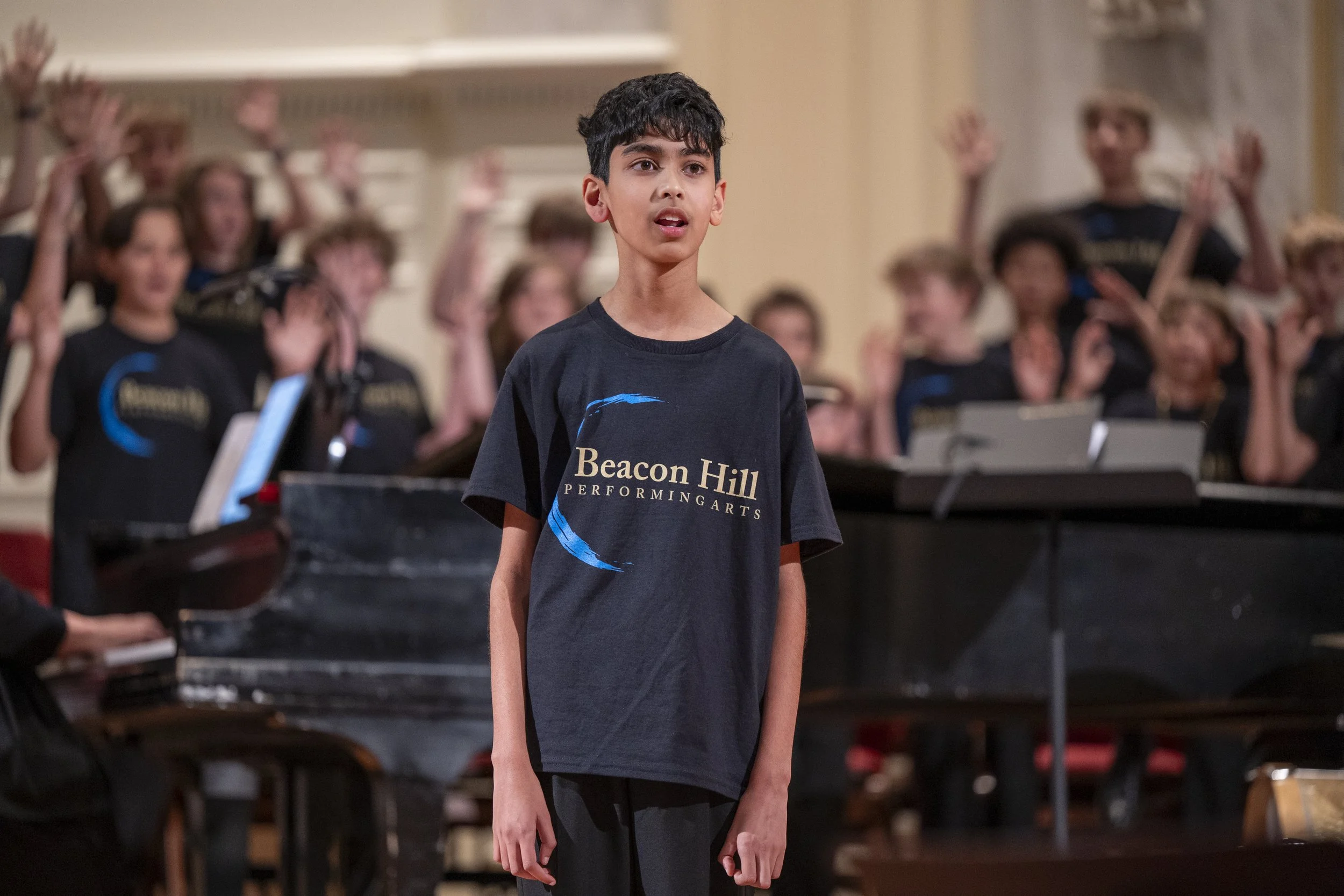
BHMS Choirs
6th Grade Choir — an introductory ensemble for all incoming students
7th Grade “Prima Voce” - intermediate treble ensemble
7th Grade Cantori” - intermediate level mixed concert choir
8th Grade “Bel Canto” - advanced level treble ensemble
8th Grade Chamber Singers - advanced level mixed ensemble
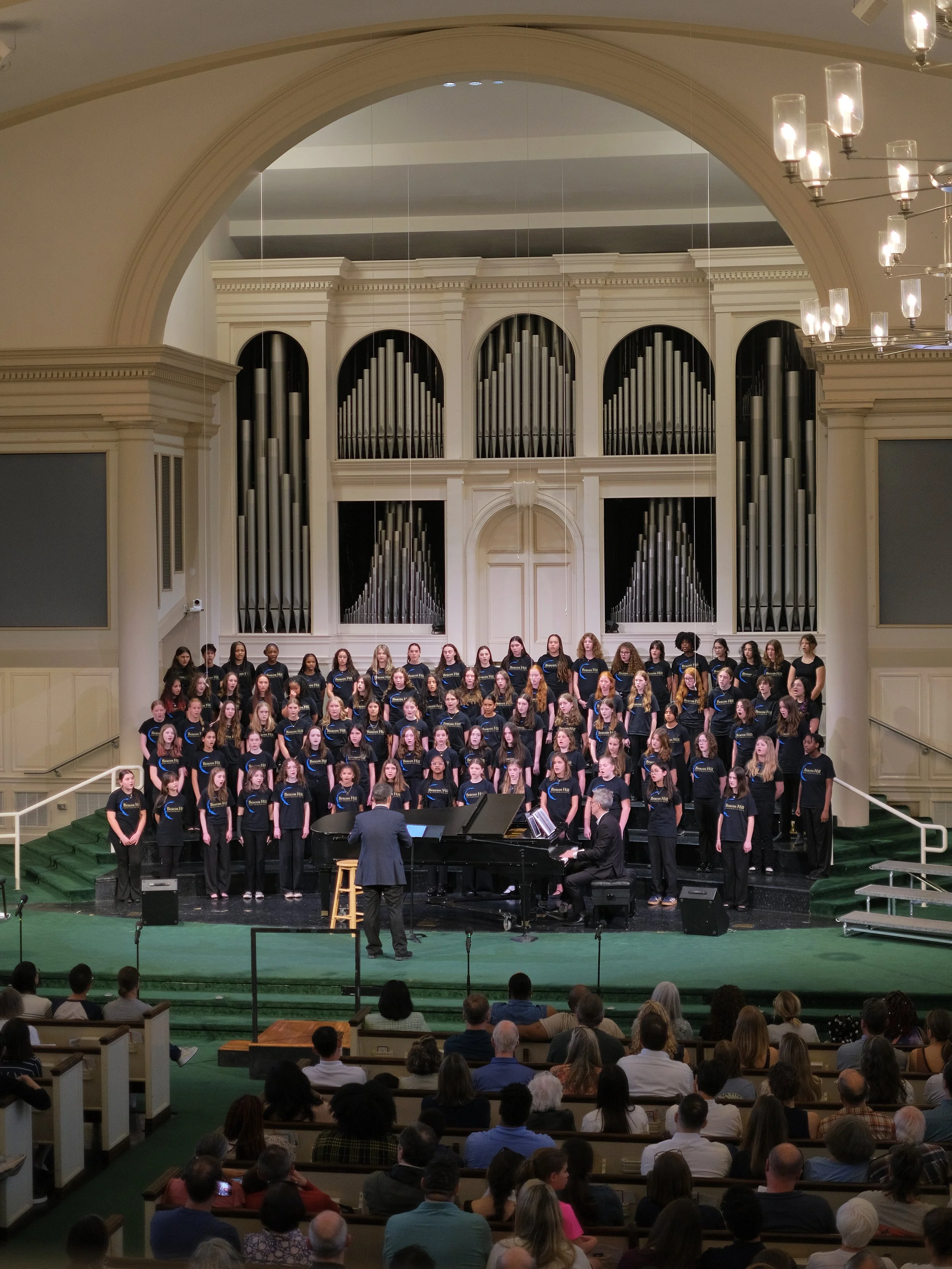
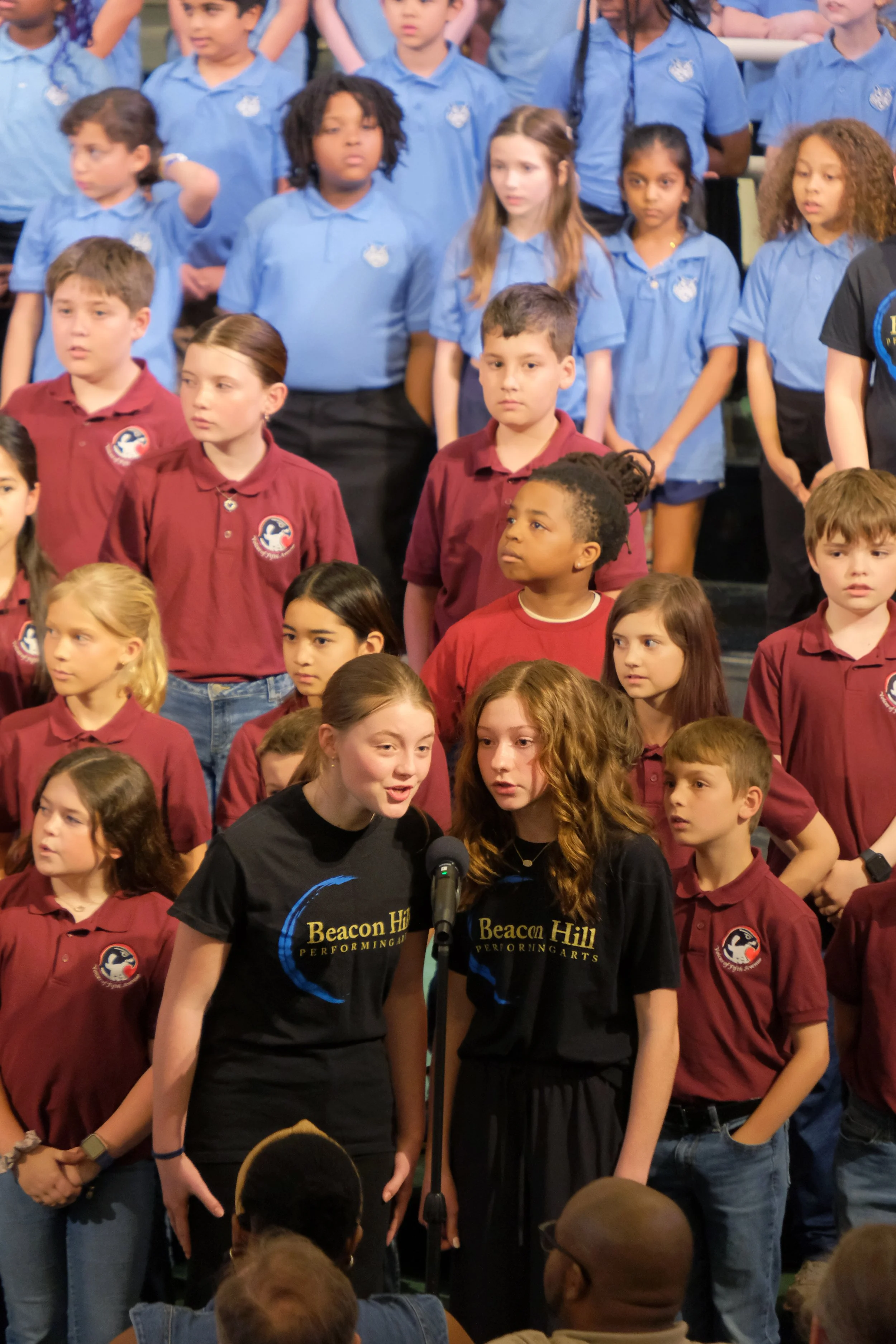
Performance is at the heart of the choral experience. Each ensemble presents three formal concerts during the school year, in the fall, winter, and spring, giving students regular opportunities to share their musical growth with family and the Decatur community. Choirs also participate in Large Group Performance Evaluation (LGPE) through, where students receive feedback from recognized choral clinicians. 7th and 8th graders are invited to audition for GMEA All-State Chorus.
Performances
Areas of Focus
Vocal Technique - Students develop healthy, age-appropriate vocal habits such as posture, breath support, tone production, resonance, vocal agility and diction, including the various stages of vocal maturation.
Music Literacy - Using the sound - label - symbol method, students learn to recognize tonal and rhythmic patterns in musical examples, label these patterns using solfege and the ta-ka-di-mi rhythm language, and identify them through musical symbol. The goal is to develop independent musicians who read music.
Global Repertoire - Ensembles study choral music representing a wide range of cultures, languages, and historical periods, from Western classical and folk traditions to music from Africa, Latin America, Asia, and beyond. Engagement with diverse repertoire broadens student’s musical vocabulary and builds respect and curiosity for musical traditions different from their own.
Expression & Creativity - Beyond technical proficiency, students are guided to connect artistically and emotionally with the music they sing. Students learn to shape musical phrase, communicate text, and make expressive choices as an ensemble. Students are encouraged to see themselves as artists, not just performers, developing the confidence to interpret and communicate through music.
Musical Growth - Guide every student toward measurable growth in vocal skill and music literacy.
Inclusive Access - Ensure that every student, regardless of prior experience, has a meaningful entry point into choral music and a clear pathway for continued growth.
Performance Excellence - Prepare ensembles to perform at a high standard in concerts, LGPE, and other settings, while teaching the discipline and poise that come with public performance.
Lifelong Musicianship - Cultivate a lasting love of singing and music-making, so that students carry curiosity, confidence, and skill with them well beyond middle school.
Program Goals
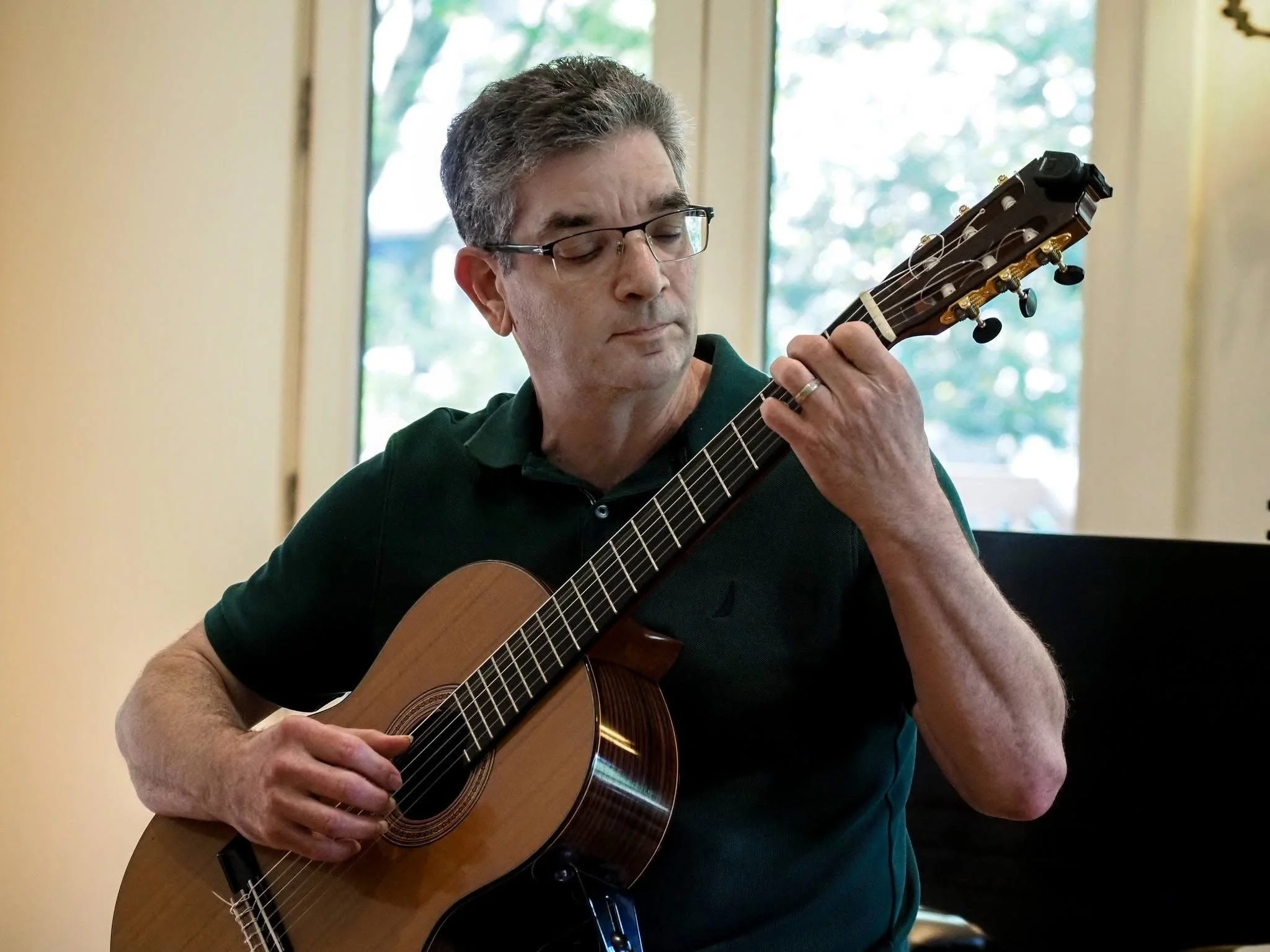
Dr. David Hirschorn
David Hirschorn (Dr. H) is in his 13th year as the choral director at Beacon Hill Middle School where he teaches 220 singers in six choirs. He holds a Ph.D. from Georgia State University and music education degrees from Florida State University and the University of Miami. David has taught elementary and middle school music for 38 years in both Florida and Georgia. He is the co-author of the Georgia Performance Standards for middle school chorus. His choirs performed at the 2008 and 2018 Georgia Music Educators Inservice Conferences and he conducted the 2009 GMEA District XIII Middle School Mixed Honor Choir, the 2012 GMEA District VII Middle School Honors Treble Chorus, and the 2024 GMEA District XIII Middle School Mixed Honor Choir. He has been published in Choral Journal, and has presented his research at conferences for GMEA and the International Society for Music Education. David, and his wife Melanie, have two rescue dogs named Bailey and Sasha.